


Seen this before? Need help with geometry? Contact us.
Overview
The photon science scientific computing group (FS-SC) exploits and develops the latest computational tools to get more out of experimental data. We do this by
- Developing improved, faster or more accurate data processing and analysis methods
- Developing robust, reliable and maintainable community software
- Optimising performance to produce results faster
- Enabling near-real-time analysis to improve experiment execution
- Developing software to exploit new segmented high-speed photon detectors
- Improving data management practices, file formats, and data collection
- Streaming data to enable immediate processing without files
- Improving the interaction between various DESY and external groups
- Better exploiting HPC and HTC resources
We specialise in processing data from large-scale photon science experiments. We work closely with facility beamlines and research groups to develop and implement data analysis solutions. This includes setting up data analysis pipelines, optimising processes and ingesting metadata. We prioritise forward-looking solutions with scalability to the needs of PETRA-IV.
How can we help you?
We use our expertise to assist scientists in getting the most out of challenging data in the most efficient way possible. While not an on-demand service, we are available to collaborate and provide consultancy on a range of topics.
Some broad topics on which we might be able to help include:
- Faster and more efficient data processing - speed up analysis software, optimise loops, add parallelism both on-node and multi-node, explore whether GPUs or FPGAs are appropriate.
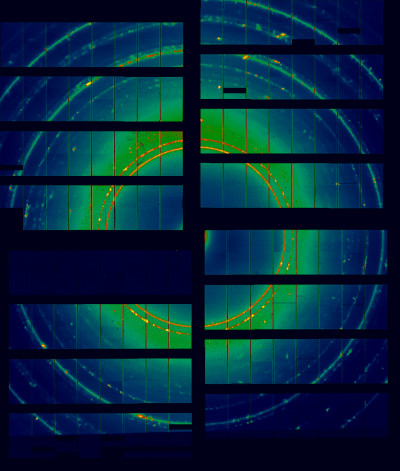
- Analysing data from segmented, high-performance detectors, for example CSPAD, AGIPD, Jungfrau, Lambda.
- Where detector segments are not perfectly aligned, we have the tools to calibrate panel locations in 3D and perform analysis ‘in one step’ without necessarily stitching a 2D image.
- Data analysis at PETRA III, FLASH and REGAE, with a view towards preparing for the requirements of PETRA IV.
- Sensible use of Maxwell resources
- Streaming data processing and real-time feedback, such as for serial crystallography at P11.
- In-memory fast feedback (see the OM/OnDA software)
- Detector calibration
- Automation of workflows
- Wrangling data formats including migration to NeXus and compressing or reducing data.
- Development of new algorithms for data processing
- (other things that are within our expertise)
If in doubt - come and talk to us. We are particularly drawn to solutions with high impact in the wider community that will be used routinely.
Learn more
Feel free to contact us about a potential collaboration. If in doubt, drop by for a chat.
| Take a look at |
